
No arrests. No closure. Just ghosts. These Philippine murders scream for answers that never come.
Mabuhay. Welcome to the Philippines! A land of paradise where golden beaches and warm smiles paint a picture of endless joy. But behind the postcard-perfect scenes lies a darker truth: a justice system where money talks, the poor is silenced and some murders never see the light.
In this country—where hospitality and horror walk hand in hand—killers can walk free, victims are forgotten, and the most chilling crimes remain frozen in time. No arrests. No closure. Just ghosts.
These Filipino true crime stories continue to haunt the nation, because they can happen to anyone. Anyone can be a killer, your family, your neighbor or your friend. Darkness can come from the most comfortable of places. On this list of pinoy murders we talk about the Maguad Siblings, the Vizconde Family Massacre and other horrifying crimes that forever leave a bad taste in our mouth. With each unsolved murder case, the nation continues to lose more faith that the justice system in the Philippines exists at all.
For today’s Asia Case Files, we pull back the curtain on the 7 most notorious unsolved murders in the Philippines.
This is the side of the Philippines you won’t find in travel brochures. These are the stories that haunt the streets, the courtrooms, and everyone’s homes. Why do they continue to torment this nation, and what are the disturbing truths they reveal?
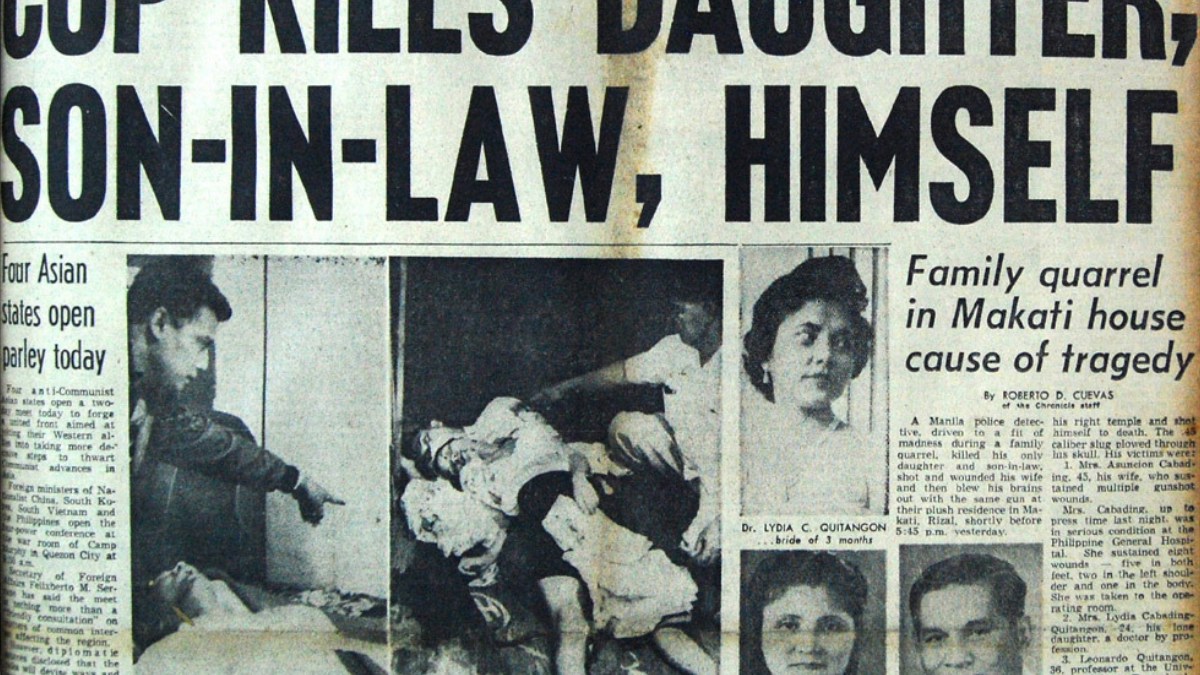
7. The House on Zapote Street: The Cabading Family Murders
The Bloodbath That Shocked Makati
The Cabading residence at 1074 Zapote Street was the envy of their neighborhood – a lavishly furnished two-story home that symbolized Detective Pablo Cabading‘s success. As a 48-year-old Manila Police investigator, he had built a life of respectability with his wife Asuncion and their only child, 24-year-old Lydia, a bright young doctor. But behind the polished facade festered a father’s unhinged obsession with control – one that would explode in a hail of gunfire on that fateful Wednesday afternoon.
On January 18, 1961, the upscale neighborhood of Zapote Street in Makati became the scene of a horror that would haunt the nation for decades.

A Father’s Deadly Ultimatum
The crisis began when Lydia married Leonardo Quitangon, a 36-year-old UST medical professor, three months earlier. Cabading had opposed the union from the start, furious that his “little girl” would dare build a life outside his dominion. His final demand? The newlyweds must live under his roof indefinitely. When they refused, the veteran policeman set his gruesome plan in motion.
Behind Locked Doors
The Manila Police detective locked himself in a second-floor bedroom with his family—his wife Asuncion, his only daughter and her husband—and opened fire with his service pistol. When the door was finally forced open, investigators found a nightmare: the young couple dead in each other’s arms, riddled with bullets; Asuncion bleeding from eight gunshot wounds; and Cabading himself with a self-inflicted gunshot to the temple. The walls were spattered with blood. The motive? A father’s twisted refusal to let go.

A Family Forever Destroyed
- Dr. Lydia Cabading-Quitangon (24): A brilliant young physician, her father’s pride—until she dared to marry against his wishes.
- Prof. Leonardo Quitangon (36): A UST medical professor who “stole” Cabading’s daughter. The detective never approved of their October 1960 wedding.
- Asuncion Cabading (45): The wounded survivor, who reportedly threw herself in front of the gun to shield her daughter.
He Ruled His Home Like a Dictator
Cabading wasn’t just a policeman—he was a man obsessed with control. He forbade Lydia and Leonardo from living independently, demanding they stay in the family home. He stalked the newlyweds with a Thompson submachine gun when they briefly escaped to Cavite. Lured them back with a lie (claiming Asuncion was “deathly ill”), then herded them into the death room.
Why It Haunts Us
The Cabading massacre is more than a true crime story—it’s a dark mirror of Filipino family dysfunctions. Pablo Cabading embodied the toxic patriarchy that still festers today: a man who saw his daughter as property, her husband as a thief, and violence as his right. This tragedy inspired two works of art—Nick Joaquin’s “The House on Zapote Street” and Mike de Leon’s film Kisapmata.
How many Filipino homes still operate on fear and control?
How many fathers view their children’s independence as betrayal?
Asuncion, who survived but lost everyone, became a ghost in her own life. The bloodstains on Zapote Street whisper a warning: Love that suffocates isn’t love. Now over 60 years later, the question lingers: Could this happen again?
6. The Lipa Arandia Massacre: A Family Butchered for Refusing a Loan
The Night That Shattered a Dream Home
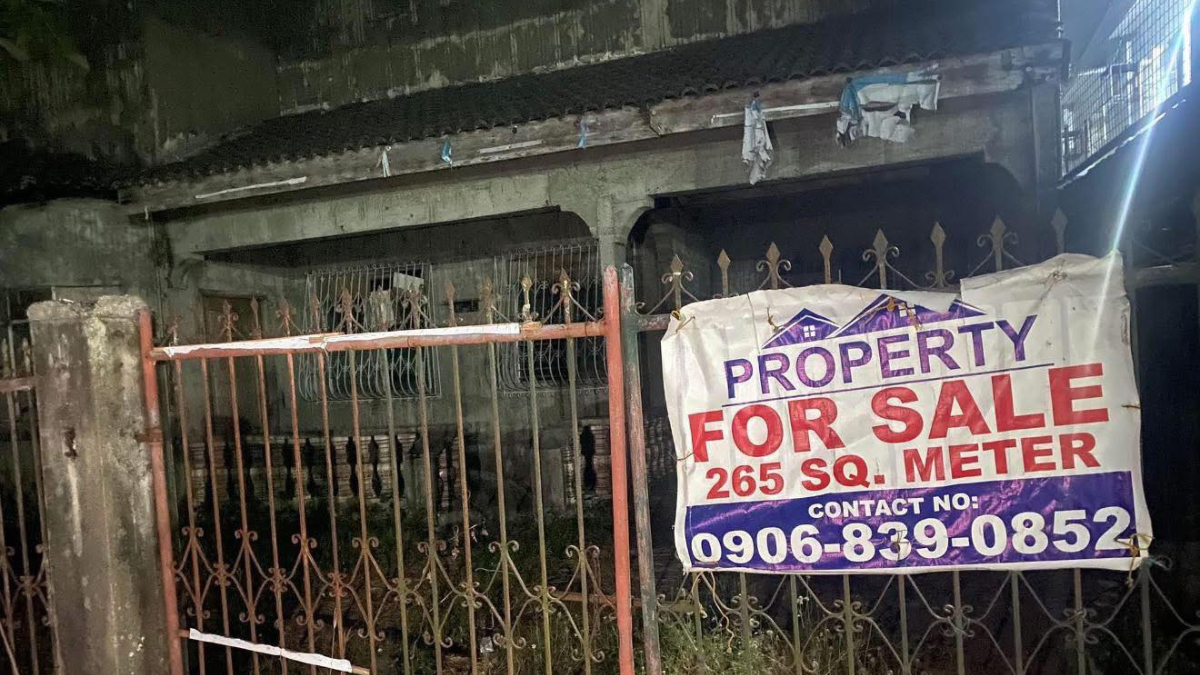
The Arandia family’s unfinished bungalow stood as a promise of better days to come. Ronald Arandia, an OFW working in Saudi Arabia, had been sending money home to build this dream house for his wife Helen, a respected special education teacher, and their two daughters – 6-year-old Chelsea Liz and 4-year-old Ann Geleen. On April 9, 1994 Helen was invited by her brother to a family gathering that night but she declined and on that very same night unspeakable horror was about to befall the Arandias. Helen double-locked their front door and had no way of knowing death would come through the back door instead.
A Neighbor’s Deadly Request
Previously Elmer Palicpic, a jobless drunkard well-known in their community, had approached Helen begging for money. His wife was in labor, he claimed. Helen politely refused, explaining their own finances were tied up in the house construction. That simple “no” would cost three lives.
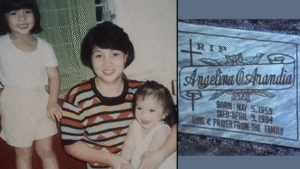
The Night of Horror
Investigators would later piece together the chilling sequence:
- Elmer, likely high on drugs, gained entry by tempting the children with candy
- He herded Helen and the girls into the living room at knifepoint
- When Helen fought back and screamed for help, he stabbed her 50 times
- The terrified children were next–all three of them suffered a total of 91 stab wounds
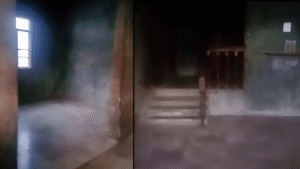
A Father’s Worst Nightmare
Meanwhile, Ronald was mid-flight for a surprise homecoming when he saw a fellow passenger reading a newspaper headlined: “Lipa Massacre.” There, on the front page, were photos of his slaughtered family. Ronald was so distraught that flight attendants would later describe how he had to be physically restrained and calmed down.
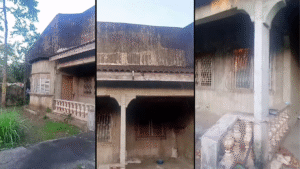
Aftermath
- Elmer was eventually caught but his current status remains unknown
- The half-built house still stands abandoned, a grim monument to the tragedy
- Ronald remarried and moved to Houston, but the scars will never heal
To this day, the Arandia house remains unoccupied. While they had renters, no family ever stayed. The neighbors claim you can still hear children’s laughter near that unfinished house at dusk–a haunting reminder of the innocent lives cut short by one man’s uncontrollable rage.
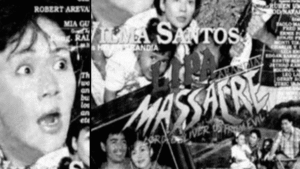
Why It Haunts Us
What makes this case a notorious unsolved murder in the Philippines? While the murderer was found, the gruesome killing of a mother and her two young children continue to leave us with many questions. Can I really trust my community? My neighbor? Is it worth the risk to leave your family behind and work abroad?
The Arandia massacre is a chilling parable of envy and broken trust. It resonated with every family on how easy it is for death to come through an unlocked door. The unfinished house where they died stands today as a ghostly monument to a family’s stolen future, while Ronald, now remarried in Texas, lives with a grief no ocean could drown.
The case forces us to ask: Did I make sure to lock all the doors? Can I really trust my neighbor? In a country where close-knit communities are both a comfort and a risk, the Arandias’ tragedy warns that sometimes, danger wears a familiar face. [1]
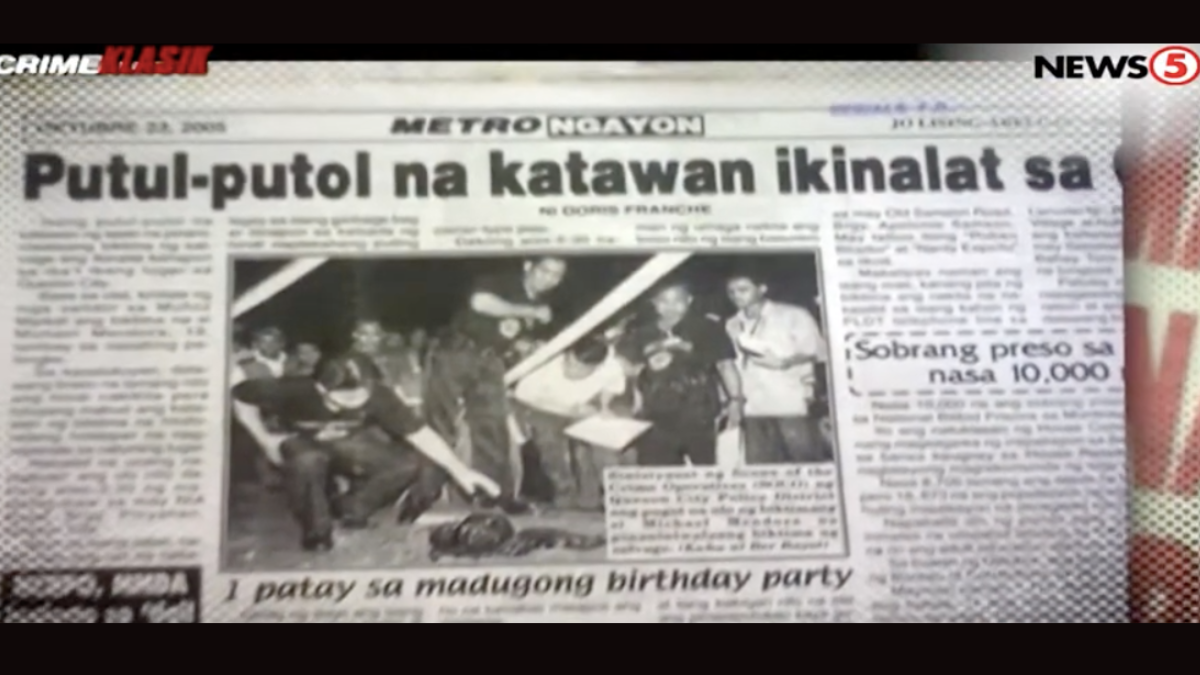
5. The Chop-Chop Murder of Michael Mendoza: A Police Brutality Case That Shocked the Nation
The Grisly Discovery
On October 22, 2005 at 3 in the morning, a garbage collector in Quezon City made a horrifying find—a severed head inside a plastic bag on Piñahan Road. By 9 AM that same morning, more body parts surfaced across the city: a torso in Balintawak, a thigh behind Muñoz Market, and a left leg in District 7. The victim was soon identified as 19-year-old Michael Mendoza, whose brutalized remains told a story of unimaginable horror no one should go through. What made the crime even more chilling? The prime suspects were police officers.
The Victim: A Young Man with Dreams
- Michael Mendoza, a loving son and brother. He was described by his mother Carmelita as a good son who sometimes got into trouble but was never violent.
- He was accused of being a thief in this local area, but was this enough reason to mutilate his body?
The Chop-Chop Horror
-
- On October 19, 2005 Michael was forcibly taken by four policemen (including SPO4 Mario Peralta) while sitting at a tricycle stand.
- Witnesses said he was handcuffed, dragged into a house linked to a former soldier named Chito Tenorio, and tortured for three days.
- According to witness “Lito”, a prisoner named Abdul was tasked to dismember Michael’s body and scatter his different body parts all over Manila.
- Noel (a police asset) later confessed to helping dump the body parts.
A Mother’s Fear
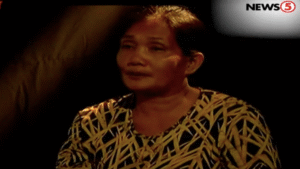
Days later Carmelita went to the Baler Police station to look for her son and found his shorts, with splatters of blood, an axe and strands of hair in the basement of the police station. However the lack of witness and evidence made it difficult for the family to find what truly happened to Micheal’s gruesome murder.
To this day, the officers involved walk free, and continue to deny they ever knew a “Michael Mendoza”. His brutal murder remains frozen in time, a testament to the harsh reality that in the Philippines, justice often belongs only to those who can afford to buy it. For families like the Mendozas—the system offers only empty promises, unanswered questions, and unmarked graves.
Why It Haunts Us
The murder of Michael Mendoza is more than a crime—it’s a damning testament of police brutality in the Philippines. The sheer sadism of his mutilated body was horrific enough as it is but when done by the very people sworn to protect the public, this shakes the nation’s crumbling faith in the justice system.
Seven years later Michael’s mother continues to fight tirelessly for answers. Yet, like so many cases of police abuse, the truth remains buried. Was there a cover up? Did higher-ups protect them? And how many more “Michael Mendozas” have there been since? His case is a grim reminder that in the Philippines, sometimes the monsters wear uniforms.
“I just want justice for my son,” Carmelita pleaded years later. But in a system where power shields the guilty, that justice may never come. [2]

4. The Chiong Sisters: A Case That Exposed the Rot in Philippine Justice
The Night That Shook Cebu
July 16, 1997 began like any other summer evening in Cebu. Two sisters Marijoy (21) and Jacqueline (23) Chiong, both daughters of a respected businessman, left home for a quick trip to Ayala Center. Marijoy, the bubbly younger sister, was excited because she had just landed a new job at a call center. Jacqueline, the serious and protective elder sister, was finishing her accounting degree. The two sisters promised their parents they’d be home by midnight.
But they never made it back.
Vanished Without a Trace
The sisters were last seen around 10 PM outside the mall, where witnesses reported them being forced into a van by several men. For two days, their family searched frantically—until a gruesome discovery was made in the mountainous outskirts of Cebu:
- A badly decomposed body at the bottom of a ravine, initially believed to be Marijoy (later disputed due to conflicting autopsy reports)
- No sign of Jacqueline—her fate remains unknown to this day
The crime scene suggested unspeakable violence:
- The recovered body showed signs of sexual assault and blunt force trauma
- Personal items (including Jacqueline’s glasses) were found scattered nearby
- Tire tracks matched a van owned by a local nightclub

The Arrest That Shocked the Nation
Police quickly zeroed in on seven suspects from prominent families, including:
- Francisco Juan “Paco” Larrañaga, 19, a culinary student with Spanish citizenship
- Josman Aznar, son of a wealthy businessman
- Ariel Balansag, Alberto Caño, James Anthony Uy, and others
The case took a dramatic turn when Davidson Valiente Rusia, a small-time criminal, became the state’s star witness. His testimony was chilling:
“They took turns raping the sisters… Paco enjoyed it the most. When Marijoy fought back, they threw her off the cliff like trash.”

The Controversial Conviction
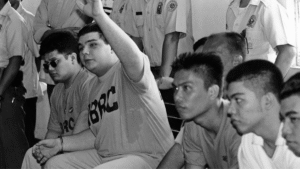
The 1999 trial captivated the nation as it exposed deep cracks in the Philippine justice system. Larrañaga’s defense presented 45 witnesses (which included culinary instructors and classmates) who all testified under oath that Larrañaga was in Quezon City on the night the crime occurred. Flight records and school documents corroborated his alibi.
Yet the presiding judge dismissed Larrañaga’s alibi as fabricated and all seven were sentenced to death.
Twists That Defied Logic
But it wasn’t over because in 2006 the abolition of the death penalty commuted their sentences to life imprisonment. In 2009 he was transferred to a Spanish prison sparking outrage from the Chiong family. In 2019, four convicts were freed under a “good conduct” law–only to surrender days later after public outcry.
Why It Haunts Us
The Chiong sisters’ case is a chilling reminder of how justice can be hijacked by politics, sloppy investigations, and outright lies. Larrañaga’s conviction, despite overwhelming alibi evidence, exposed a system where connections matter more than truth, where a wealthy family’s influence and international pressure can twist the scales of justice.
The parents and they daughters were robbed of any real answers. “We fought for a conviction,” Dionisio said wearily, “but the government wanted him in Spain. We can’t beat the government.” Even now, with Larrañaga serving time in Madrid and other convicts inexplicably freed, the questions linger:
Were the real killers ever caught? Was Paco Larrañaga really innocent? And most importantly where is Jacqueline’s body?
And most damning question of all—if this could happen to a middle-class family then who’s safe? [3]
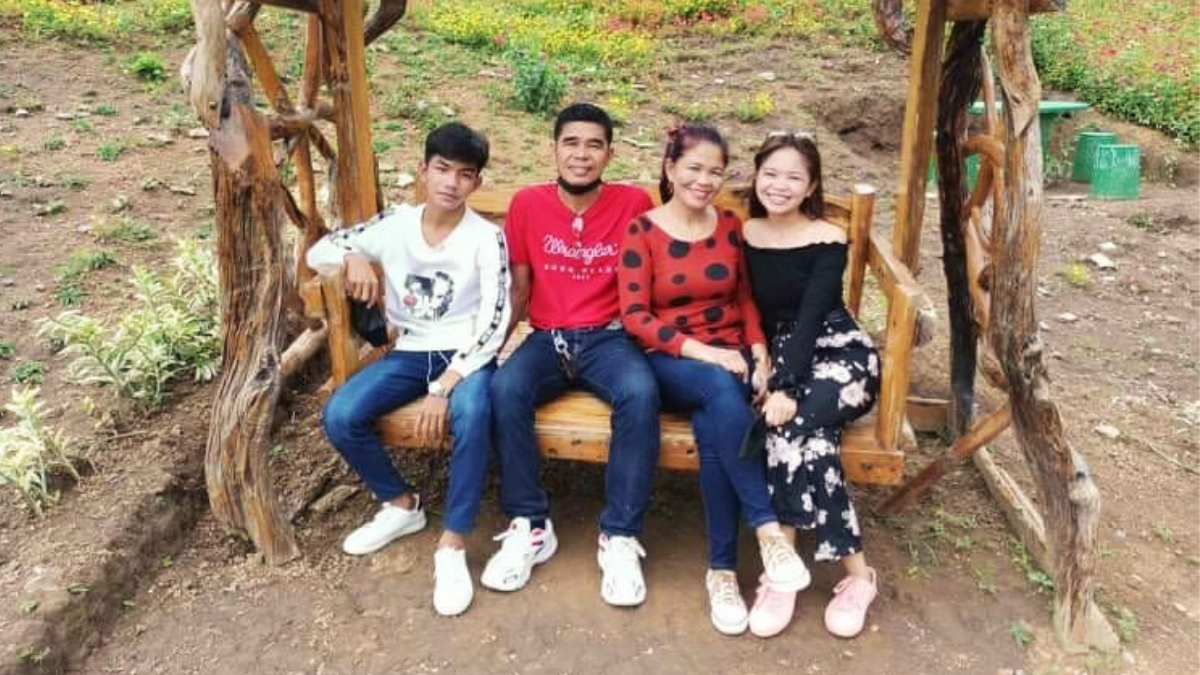
3. A Chilling Case of Betrayal in the Family Home: The Maguad Siblings
The House of Horrors in M’lang, Cotobato
The Maguad family home in Barangay Bagontapay, M’lang, Cotabato, stood as a symbol of hope—a modest bungalow under construction, funded by the hard-earned wages of public school teachers Cruz and Lovella Maguad. Inside its unfinished walls lived their two bright children: 18-year-old Crizzlle “Gwynn,” a compassionate nursing student at the University of Southern Mindanao, and 16-year-old Crizvlle “Boyboy,” a quiet but witty Grade 10 student.
In July 2021, the family’s kindness extended to 16-year-old Janice Sebial Emuelin, a working student Gwynn had met through church activities. Though Janice had stolen ₱10,000 (176 USD) from them months earlier, Gwynn had pleaded for her to stay. “She needs guidance,” Gwynn had told her parents, unaware she was inviting a viper into their nest
On December 10, 2021, Cruz was at work when his neighbor called: there was something wrong in his house. Maguad immediately returned home to a scene no parent should ever witness. His daughter, Gwynn, lay lifeless with 32 stab wounds. Beside her lay her brother, Boyboy, bound, gagged and beaten to death. Their adopted daughter Janice? She was unharmed, and sobbing in a corner. She cried of masked intruders who bursted in through their doors.
But nothing about her story added up.

The Victims: A Bright Future Cut Short
- Crizzlle “Gwynn” Maguad: A compassionate nursing student at the University of Southern Mindanao who had, despite stealing from her, forgiven Janice and was willing to give her a second chance. Gwynn knew of Janice’s hard life and so she begged her parents to take her in as one of their own.
- Crizvlle “Boyboy” Maguad: A cheerful Grade 10 student who looked up to his big sister.
- The Parents: Cruz and Lovella, both public school teachers, had taken Janice in as a working student after meeting her through church.
The Lies Unravel
As the investigators began piecing together Janice’s story, nothing was adding up. There were no signs of forced entry–which means the killers were already inside. Her Facebook activity during the incident depicted “Please help us”, which she said she posted mid-attack, as she was hiding. Bloodstained clothes found near a canal was linked to her accomplice, a 17-year old altar boy Esmeraldo Cañedo Jr.
The Confession:
After days of questioning, Janice confessed. She admitted that she planned the murders out of jealousy and hatred, enlisting the help of Esmeraldo. Together, they used:
- A knife, baseball bat, hammer, and machete from the Maguad home.
- Brutal overkill—Gwynn was stabbed 32 times, while Boyboy was beaten and bound.

“I hated them,” Janice said flatly during her trial. The reasons she gave were petty, that of a teenager, yet they carried a horrifying weight. She admitted she was jealous of Gwynn, because she had loving parents, a future–things that Janice didn’t have. Gwynn’s family loved her, and Janice resented her for that.
She and Esmeraldo had attacked Boyboy first, silencing him before turning on Gwynn. The 16-year old body suffered 32 stab wounds–an overkill spoke of a rage that went far beyond any logic.
Justice for the Maguad Siblings
Despite being minors, both killers were tried as adults under Philippine law (RA 9344) for acting “with discernment.” Finally on May 17, 2022, both Janice and Esmeraldo were sentenced to 22-37 years in prison.
A Parents’ Agony
Cruz Maguad, once a proud teacher, became a ghost of himself. Lovella, who had treated Janice like a daughter, could barely speak. The case gripped the nation, with #JusticeForMaguadSiblings trending as Filipinos grappled with the horror:
How could a girl they sheltered butcher their children?

Why It Haunts Us
The Maguad siblings’ murder exposed a nightmare scenario that shakes every Filipino family to its core: a monster inside your house and the dangers of blind trust. Janice, the adopted daughter they sheltered and welcomed into their home, repaid their kindness with calculated brutality.
This case forced the nation to confront uncomfortable truths about informal adoptions gone wrong, about teens capable of premeditated evil, and about a justice system unprepared for such chilling crimes committed by minors.
And for Cruz and Lovella? There’s no closure. Only questions:
What signs did we miss? Could we have saved them?
The answers died with Gwynn and Boyboy—two bright souls extinguished by the very person they called sister. [4]
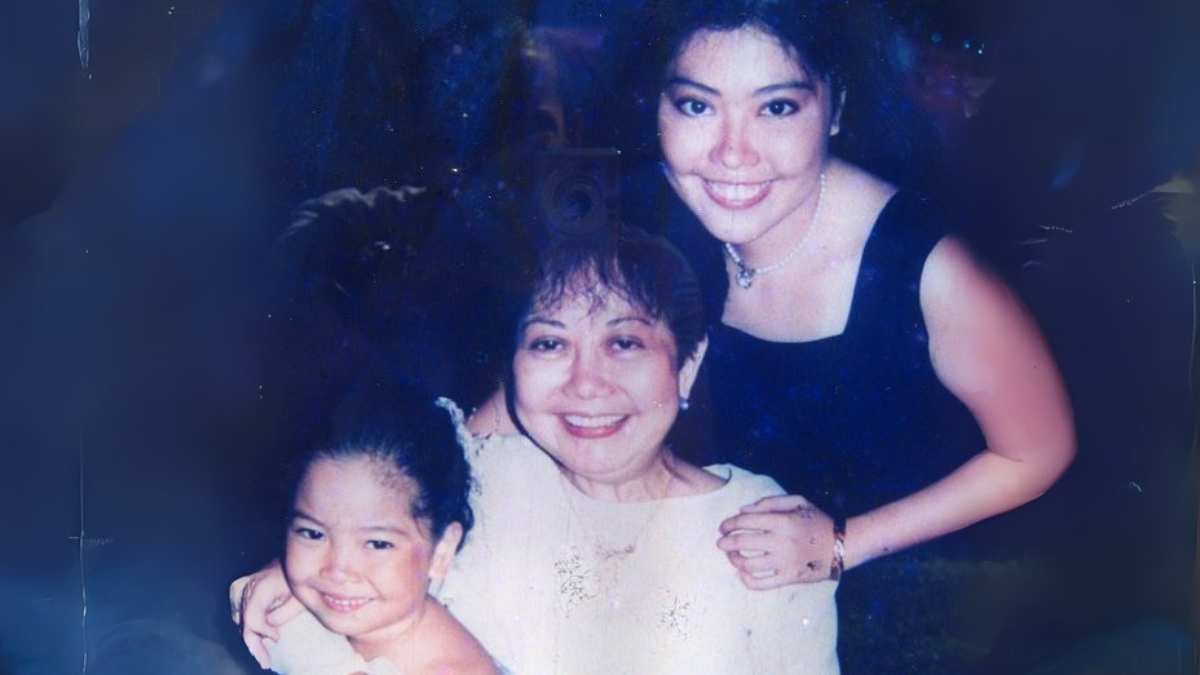
2. The Vizconde Massacre: A Gated Community’s Bloody Secret
The Night That Shattered Illusions of Safety
When you live in an upscale neighborhood like BF Homes in Parañaque, you have all the trappings of security—a gated community, guards who check IDs at the entrance, high walls separating you from the outside world. You tell yourself: Nothing bad can happen here. This was what the Vizconde family believed too on the evening of June 29, 1991, as 19-year-old Carmela laughed with friends in their home. They felt safe behind their locked doors, surrounded by neighbors just like them—professional, middle-class families.
They couldn’t have been more wrong.
The Night of the Crime
By dawn, the house on Vinzons Street had become a slaughterhouse. Estrellita Vizconde (47), a devoted nurse and mother, lay dead with 13 stab wounds, her hands torn from trying to shield her daughters. Carmela, the bright pre-med student whose dreams had filled the home with hope, was found raped and stabbed 17 times. Seven-year-old Jennifer—the baby of the family, whose stuffed animals still sat neatly on her bed—had been stabbed 19 times, her small body brutalized beyond recognition.
The killers left a chilling message scrawled in Carmela’s blood on the bedroom wall: “Wag tularan, salot sa lipunan.” (“Do not imitate, scourge of society.”) A taunt. A signature.
For Lauro Vizconde, an OFW working in America to give his family this very security, the nightmare began with a phone call. He landed in Manila to a reality worse than any horror movie: his entire family had been erased. The guards, the gates, the illusion of safety—none of it had mattered.
The Witness Who Broke the Silence
For four agonizing years, the Vizconde family’s case grew colder by the day. The police had bungled the crime scene—burning bloodstained sheets and mishandling evidence. Six men from a local akyat-bahay gang had even falsely confessed after allegedly being tortured, only to be released when their stories fell apart. Lauro Vizconde, now a hollow-eyed ghost of himself, had begun to believe the truth would die with his family.
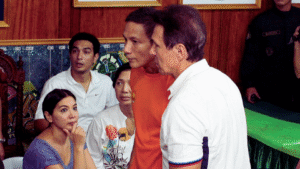
Then, on April 28, 1995, a bombshell: Jessica Alfaro, a 23-year-old former drug addict and NBI informant, came forward with a story so chilling it made headlines nationwide.
“I Was There That Night”
Alfaro claimed she’d been at the Vizconde house during the massacre with a group of wealthy, connected young men:
- Hubert Webb, 26, son of former Senator Freddie Webb
- Antonio Lejano II, scion of a prominent family
- Hospicio Fernandez, Michael Gatchalian, Miguel Rodriguez, Peter Estrada, and two others.
Her testimony painted a scene of unfathomable cruelty:
1. The Plan: Hubert Webb had allegedly organized the attack to rape Carmela, whom he’d been obsessed with.
2. The Bloodbath:
- Estrellita was stabbed first when she tried to protect her daughters.
- Carmela was raped by multiple men before being murdered.
- Little Jennifer bit Webb’s arm—enraging him. He allegedly slammed her into a wall before stabbing her 19 times.
>> The Cover-Up: Policeman Gerardo Biong (later convicted as an accessory) helped burn evidence, including Webb’s bloodstained jacket.
The Trial That Divided a Nation
The People of the Philippines vs. Hubert Webb 1995 trial became a media circus, exposing the rot in the justice system:
- Webb’s Alibi: He claimed to be in the U.S. from 1991–1992, presenting flight records and photos. But witnesses—including his family’s maids—contradicted him, saying they’d seen him in Manila weeks before the murders.
- Alfaro’s Credibility: The defense painted her as a liar, noting she was high on drugs that night. Yet her gruesome details matched the crime scene perfectly.
- Political Pressure: Webb’s father, a senator, allegedly pulled strings. Key evidence—like semen from Carmela’s rape kit—mysteriously vanished.
In January 2000, Judge Amelita Tolentino delivered a verdict that shocked the nation: Guilty. Webb and six others were sentenced to life in prison. Lauro, weeping in court, whispered, “This is for you, Carmela.”
Justice Undone
But it wasn’t over and the Webbs fought back. For 10 years, they appealed—until on December 14, 2010, when the Supreme Court overturned the verdict, citing “reasonable doubt.” The ruling hinged on:
- Alfaro’s “unreliable” testimony (despite her corroborated details)
- The lost DNA evidence
- Webb’s U.S. travel records (though experts noted they could’ve been falsified)
Hubert Webb walked free after 15 years in prison, smiling for cameras. Lauro, now white-haired and frail, collapsed outside the courthouse, screaming: “There is no justice in the Philippines!”
Why It Haunts Us
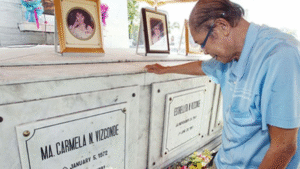
The Vizconde massacre exposed every Filipino’s deepest fears: that wealth and connections trump justice, that gated communities are illusions, and that the system will fail you when it matters most. Lauro Vizconde became a ghost of himself—protesting outside the Supreme Court every June 30th until his death in 2016, screaming at a system that let suspects walk free.
The case left behind dozens of unanswered questions: Was Webb truly guilty? Why did the police destroy evidence? Who really wrote that bloody warning? Today, the Vizconde home stands empty—a monument to justice denied and a warning that no walls are high enough to keep evil out. [5] [6]

1. The Girl Whose Face Was Stolen: Christine Silawan’s Brutal Murder
The Nightmare in Lapu-Lapu City
On March 11, 2019, a quiet morning in Barangay Bankal, Lapu-Lapu City, turned into a scene from a horror film. A passerby found the body of 16-year-old Christine Lee Silawan sprawled in a vacant lot—her face skinned to the bone, her esophagus exposed, and her neck and right ear missing. She lay naked from the waist down, her school uniform folded neatly beside her. The brutality was so extreme that even seasoned investigators recoiled.
Just a typical 16 year old
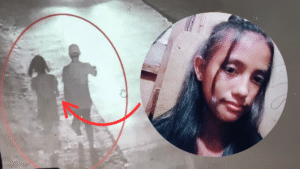
Christine wasn’t just another victim—she was a bubbly teenager who scribbled Wattpad stories, danced to BTS, and collected church offerings every Sunday. “She’d give her last peso to stray dogs,” her mother, Lourdes, later told reporters. On the day she vanished, CCTV footage captured her walking with a man near Sacred Heart Parish. It was the last time she was seen alive.
The Catfish Killer
Police soon zeroed in on three suspects:
- John, her 17-year-old ex-boyfriend, who had a shaky alibi (he claimed he was playing basketball).
- Jonas Bueno, a jailed murderer whose crimes bore grim similarities.
- Renato Lanes, a 43-year-old drifter who catfished Christine using a fake Facebook profile named “CJ Diaz.”
Lanes later confessed: He lured her to the church, then flew into a rage when she rejected him for being “too old.” He strangled her, poured acid on her face, and—using scissors—peeled her skin “so no one could ID her.” Yet he insisted he didn’t rape her, despite the PAO’s claim of vaginal lacerations.
The Twists That Defied Logic
- The NBI disputed the rape finding, calling it a botched theory.
- Lanes hanged himself in jail—was it suicide, or was he silenced?
- Christine’s family still believes John was involved.
Why It Haunts Us
Her case became a national obsession, sparking debates about online predators, police incompetence, and whether justice is only for the powerful. Five years later, her mother and the nation still waits for answers. Why was Christine Lee Silawan’s murder never solved? [7]